Amman is often treated as the place where a Jordan trip begins rather than a destination itself.
That is a mistake.
Jordan’s capital combines Roman ruins, crowded souqs, excellent food, rooftop cafés, museums, art galleries, historic neighborhoods, and modern districts across a city built over rolling hills. The official Jordan Tourism Board describes Amman as a city where modern buildings, galleries, and restaurants sit alongside traditional coffee shops, markets, and workshops.
If you are wondering what to do in Amman in 2026, give the city at least one full day.
Two days are even better.
Here is how to spend them.
1. Start at the Amman Citadel
If you only visit one historical attraction in Amman, make it the Amman Citadel.
Sitting high above downtown on Jabal Al Qal’a, the Citadel gives you one of the best introductions to both the history and geography of Amman.
The site contains remains from several periods of the city’s history, including the Temple of Hercules, the Umayyad Palace complex, a Byzantine church, and the Jordan Archaeological Museum.
But the ruins are only half the reason to come.
Walk toward the edge of the hill and you get a panoramic view across the densely packed buildings of downtown Amman.
It immediately helps the city make sense.
For photographers, the Citadel is particularly beautiful later in the day when the light begins to soften.
2. Walk Down to the Roman Theatre
From the Citadel, continue toward downtown and visit the Roman Theater.
Built into the hillside during the Roman period, the restored theatre dates to the 2nd century AD and could accommodate around 6,000 spectators. It remains one of Amman’s most recognizable landmarks.
Climb the steep rows of seats for another perspective over downtown.
The theatre also houses small museums dedicated to Jordanian traditions and folklore, making it an easy place to spend more time if you are interested in local culture.
3. Get Lost in Downtown Amman
Now forget the sightseeing checklist for an hour.
Walk.
Downtown Amman, usually called Al Balad, is where the city feels most alive.
You will pass fruit and vegetable markets, spice shops, bakeries, clothing stores, gold shops, cafés, street vendors, old staircases, mosques, and buildings squeezed together along busy streets.
Walk through Souq Al Sukar and the surrounding markets.
Buy something you cannot identify.
Drink fresh juice.
Stop for Arabic coffee.
Watch people negotiate over vegetables.
This is not a polished tourist district designed to look traditional.
It is a functioning downtown where people actually shop, eat, work, and meet.
That is what makes it worth experiencing.
4. Eat Falafel and Hummus Downtown
Eventually you are going to smell something that changes your itinerary.
Follow it.
One of Amman’s best experiences is eating your way through downtown.
A famous starting point is Hashem Restaurant, a simple downtown institution known for falafel, hummus, foul, bread, and other classic dishes. The Jordan Tourism Board itself includes Hashem among its recommended Amman experiences.
Do not expect an elaborate dining experience.
That is not the point.
Sit down, let the table fill with food, tear some bread, and eat.
5. Finish With Knafeh
You are not finished eating.
You are simply changing categories.
Head for Habibah Sweets – Downtown and order knafeh.
Knafeh combines cheese, pastry, syrup, and pistachios into something that makes counting calories during a Jordan trip completely pointless.
Habibah is one of Amman’s most famous places to try it, and the downtown branch regularly has people eating their portions standing outside nearby. The Jordan Tourism Board specifically highlights Habibah as a classic stop after hummus and falafel downtown.
Get a small portion.
You can always make the responsible decision to immediately order another one.
6. Visit the Grand Husseini Mosque
While exploring downtown, you will probably pass the Grand Husseini Mosque.
The mosque was built in 1924 by King Abdullah I on the site of an older mosque and sits directly among the traditional markets and food stalls of downtown Amman.
Even if you only see it from the surrounding streets, it is an important part of the atmosphere of Al Balad.
Remember that it is an active place of worship.
Dress respectfully and avoid disrupting prayer.
7. Walk Along Rainbow Street
After the chaos of downtown, head uphill toward Jabal Amman.
Rainbow Street is one of the city’s best known streets for visitors, with restaurants, cafés, small shops, galleries, and historic buildings.
The Jordan Tourism Board describes it as one of Amman’s oldest streets and a popular destination for eating, shopping, and nightlife.
But do not limit yourself to Rainbow Street itself.
Explore the surrounding streets and staircases of Jabal Amman.
This part of the city is best experienced slowly.
Stop for coffee.
Find a terrace.
Watch the traffic below.
Then realize you have somehow spent two hours drinking one coffee.
That is completely acceptable in Amman.
8. Discover Jabal Al Lweibdeh
If Jabal Amman is already on most tourist itineraries, Jabal Al Lweibdeh gives you another side of the city.
The neighborhood is known for cafés, old villas, cultural spaces, galleries, restaurants, and a more relaxed atmosphere.
It is particularly good for travelers interested in contemporary Jordanian culture rather than archaeological sites alone.
Walk without a strict destination and stop whenever somewhere looks interesting.
This is also one of the better neighborhoods for spending an afternoon working from a café or simply escaping the traffic for a while.
9. Visit Darat Al Funun
Art lovers should make time for Darat Al Funun.
Located among historic buildings overlooking downtown, the space focuses on contemporary Arab art and regularly hosts exhibitions and cultural activities.
Even travelers who are not serious art enthusiasts may enjoy the architecture, gardens, and atmosphere.
It also fits naturally into an itinerary connecting downtown with Jabal Al Lweibdeh.
10. Visit the Jordan Museum
If Petra, Jerash, Madaba, and Jordan’s other archaeological sites leave you wanting more context, visit the Jordan Museum.
Located in Ras Al Ain, the museum presents Jordan’s history and cultural heritage through archaeological objects and exhibitions spanning different periods.
This is not just something to do in Amman when it rains.
Visiting the museum early in your Jordan trip can actually make the archaeological sites you see later more meaningful.
Give yourself at least an hour.
History lovers can easily stay longer.
11. See Duke’s Diwan
Amman rewards people who look beyond the obvious attractions.
Duke’s Diwan is a good example.
The historic downtown building once served as Amman’s first post office during the 1930s before becoming a hotel and eventually a cultural gathering space.
It offers a completely different experience from the Citadel and Roman Theatre.
Instead of monumental ruins, you get a more intimate glimpse into Amman’s relatively recent urban history.
12. Explore Amman’s Staircases
There is one thing every visitor learns quickly.
Amman has hills.
A lot of them.
Neighborhoods are connected by long staircases that cut between buildings and streets. Some have cafés, artwork, plants, shops, and viewpoints along the way.
Instead of treating the stairs as an inconvenience, make them part of your experience.
Just wear comfortable shoes.
You will understand why after your first afternoon.
13. See the King Abdullah I Mosque
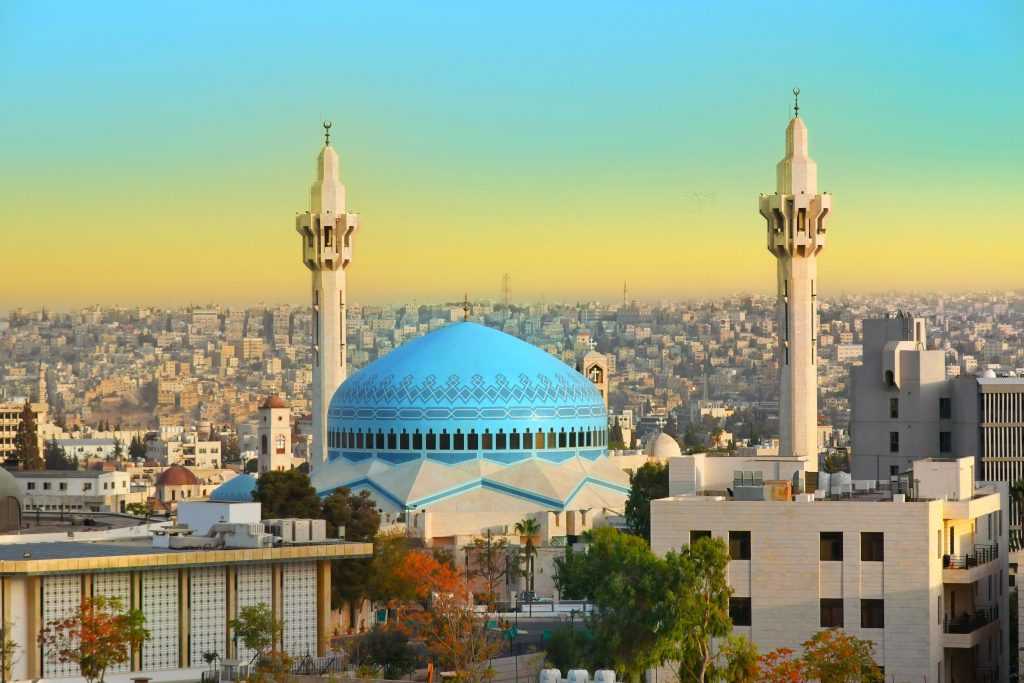
The blue domed King Abdullah I Mosque is one of modern Amman’s most recognizable religious landmarks.
It provides a different architectural experience from the older mosques downtown and is frequently included in Amman city tours.
As with any religious site, dress appropriately and be respectful of worshippers and prayer times.
14. Visit the Royal Automobile Museum
Even people who are not obsessed with cars may find the Royal Automobile Museum surprisingly interesting.
Its collection uses vehicles connected to Jordan’s royal family to tell parts of the modern history of the Hashemite Kingdom.
The collection includes cars and motorcycles from different periods as well as rare vehicles.
It is particularly useful if you have already explored the historical center and want something completely different for your second day.
15. Experience Modern Amman in Abdali
Amman is not only ancient ruins and old markets.
Head to Abdali and the contrast becomes obvious.
The Boulevard and surrounding district represent a much newer side of the capital, with modern architecture, restaurants, cafés, hotels, and shopping.
The difference between downtown Amman and Abdali is part of what makes the city interesting.
You can walk through Roman ruins in the morning, eat falafel in a crowded downtown alley at lunch, and sit among glass towers that evening.
16. Eat Mansaf
At some point during your stay, try mansaf.
Jordan’s most famous traditional dish typically combines lamb, rice, shrak bread, and jameed, a fermented dried yogurt sauce.
It is rich.
It is filling.
And ordering another meal two hours later may suddenly seem impossible.
For travelers interested in Jordanian culture, trying mansaf is as important as checking another attraction off the list.
17. Drink Arabic Coffee and Tea
Not every travel experience needs an entrance ticket.
Coffee and tea are deeply embedded in everyday social life in Jordan.
Try Arabic coffee flavored with cardamom, Turkish style coffee, or sweet black tea with mint.
More importantly, slow down enough to actually enjoy it.
One of the pleasures of Amman is moving between its different neighborhoods and stopping for coffee whenever you find somewhere interesting.
18. Experience Amman at Night
Do not return to your hotel immediately after dinner.
Amman changes after dark.
Cafés fill up.
Restaurants get busier.
People stay out late.
Rainbow Street, Jabal Amman, Lweibdeh, Abdali, Abdoun, and other parts of western Amman all offer different evening experiences.
You do not necessarily need a nightlife plan.
Sometimes coffee, dessert, shisha, and people watching are enough.
19. Take a Day Trip to Jerash
Amman is also one of the best bases for exploring northern Jordan.
Jerash is an easy addition.
The ancient city of Gerasa contains an extraordinary concentration of Roman architecture, including Hadrian’s Arch, the Oval Plaza, Cardo Maximus, temples, theatres, and long rows of columns. The official tourism board suggests roughly an hour of driving from Amman.
If you only have a few days in Jordan and prefer not to change hotels constantly, staying in Amman and exploring Jerash as a day trip works very well.
Zoor Tours can arrange private transportation and guided day trips from Amman, allowing you to visit Jerash without worrying about buses, transfers, or negotiating transportation on the day.
20. Combine Jerash and Ajloun
If you are already driving north, consider combining Jerash with Ajloun.
The combination gives you Roman history, greener landscapes, mountain scenery, and medieval architecture in one day.
This is a much better use of your time than driving from Amman to northern Jordan on separate days.
A private tour with Zoor Tours can combine the stops according to your schedule and return you to your Amman hotel in the evening.
21. Take a Day Trip to Madaba and Mount Nebo
Southwest of Amman, Madaba and Mount Nebo make another natural combination.
Madaba is famous for its Byzantine and Umayyad mosaics, while Mount Nebo is associated with the biblical story of Moses overlooking the Promised Land.
These destinations can also be incorporated into a route between Amman and the Dead Sea.
If you are building a multi day Jordan itinerary, ask Zoor Tours to include them as part of the journey rather than treating each attraction as a separate day trip.
22. Visit the Dead Sea From Amman
Yes, you can visit the Dead Sea from Amman.
And yes, you should actually get into the water.
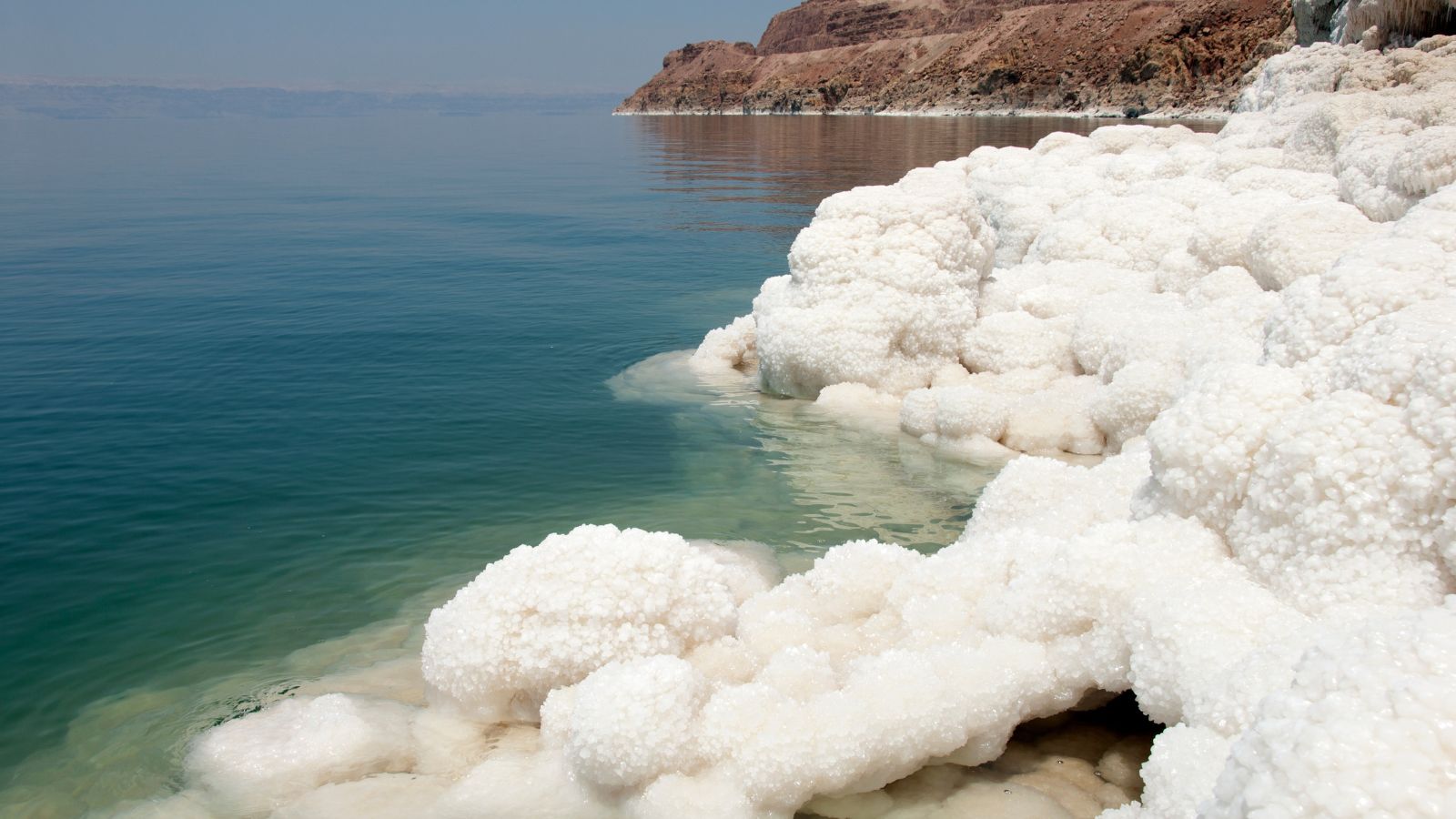
Floating in the extremely salty water is one of Jordan’s signature experiences and works easily as a day trip from the capital.
You can spend several hours at a resort or beach before returning to Amman, or continue south as part of a larger Jordan itinerary.
This is where planning your route matters.
If you are traveling onward to Petra, Wadi Rum, and Aqaba, Zoor Tours can arrange the trip so that you continue through Jordan rather than constantly returning to Amman.
How Many Days Do You Need in Amman?
One full day is enough to see the essential attractions.
With one day, focus on the Citadel, Roman Theatre, downtown Amman, local food, Rainbow Street, and Jabal Amman.
Two days give you a much better experience.
You can add the Jordan Museum, Lweibdeh, galleries, cafés, modern Amman, and more time exploring without rushing.
Three or more days make sense if you are using Amman as a base for day trips to Jerash, Ajloun, Madaba, Mount Nebo, and the Dead Sea.
What to Do in Amman in One Day
If you only have one day, keep your route geographically simple.
Start at the Amman Citadel in the morning.
Walk or drive down to the Roman Theatre.
Explore downtown Amman.
Have falafel and hummus for lunch.
Get knafeh afterward.
Walk through the souqs.
Head toward Jabal Amman and Rainbow Street in the afternoon.
Finish with dinner and a rooftop view over the city.
That gives you ancient Amman, everyday Amman, and modern Amman without spending half your day sitting in traffic.
What to Do in Amman in Two Days
Use your first day for the classic route through the Citadel, Roman Theatre, downtown, Rainbow Street, and Jabal Amman.
On day two, slow things down.
Visit the Jordan Museum.
Explore Jabal Al Lweibdeh.
Visit an art gallery.
Spend some time in Abdali or another modern part of the city.
Then build your evening around food rather than attractions.
Alternatively, use your second day for a trip to Jerash and Ajloun.
Is Amman Worth Visiting?
Absolutely.
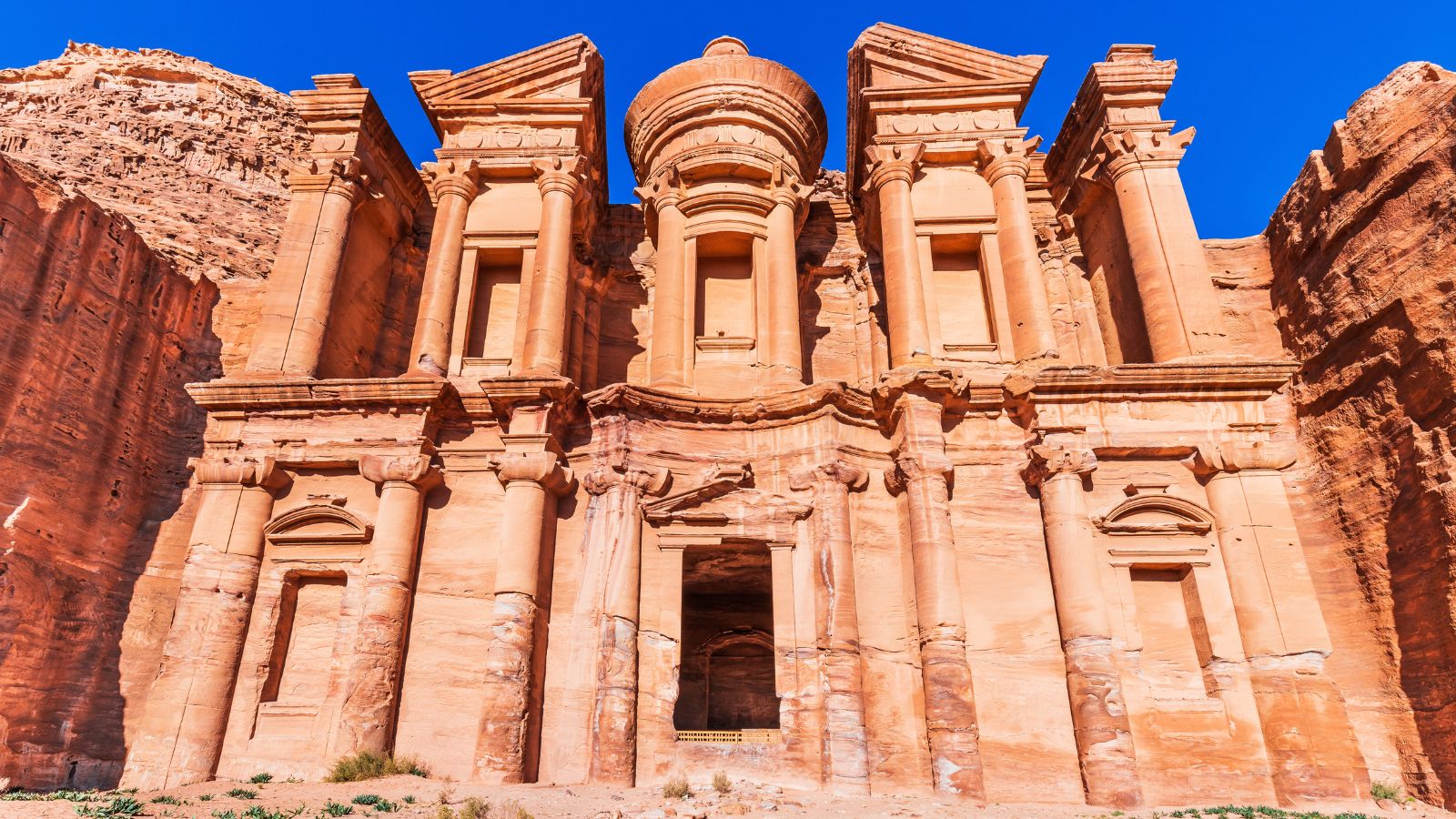
But Amman becomes much more enjoyable when you stop comparing it with Petra.
Petra impresses you immediately.
Amman takes longer.
Its appeal comes from walking through neighborhoods, eating, climbing stairs, talking to people, discovering cafés, watching the city from hilltops, and seeing thousands of years of history layered into an active modern capital.
Give it time.
Is Amman Walkable?
Parts of it are.
Downtown Amman, the Citadel area, Rainbow Street, Jabal Amman, and Lweibdeh can all be explored substantially on foot.
The problem is that Amman is large, hilly, and spread across many neighborhoods.
You should expect to combine walking with taxis or ride hailing services.
Trying to walk everywhere simply because two places look close on a map can lead to some very unpleasant discoveries involving hills.
Is Amman Safe for Tourists?
Amman is a major capital city and normal travel precautions still apply.
Keep an eye on your belongings in busy areas, use reputable transportation, respect local customs, and check current travel guidance before your trip.
In busy central neighborhoods and major tourist areas, visitors will generally find plenty of hotels, restaurants, shops, taxis, and other travelers around them.
What Should You Wear in Amman?
There is no single tourist dress code for Amman, but relatively modest clothing is the easiest choice.
The city varies considerably by neighborhood and setting.
What feels normal at a modern restaurant in Abdali may be different from what is appropriate when visiting a mosque or traditional downtown area.
Bring comfortable shoes regardless of what else you wear.
Amman’s hills are not interested in your fashion choices.
Where Should You Stay in Amman?
For first time visitors, Jabal Amman and the areas around Rainbow Street are convenient if you want restaurants, cafés, and relatively easy access to downtown.
Lweibdeh is excellent if you prefer a quieter neighborhood with cafés and cultural spaces.
Abdali works well if you prefer modern hotels and amenities.
Other parts of western Amman may be better for travelers prioritizing upscale restaurants, shopping, or business travel.
The best location ultimately depends on what you want to do.
When Is the Best Time to Visit Amman?
Spring and autumn generally provide comfortable conditions for walking and sightseeing.
Summer is dry and can become hot during the day, although evenings are often much more pleasant.
Winter is colder than many visitors expect.
If you are traveling during winter, do not pack for Jordan as though the entire country is a desert.
Amman sits at elevation and can get genuinely cold.
Frequently Asked Questions About Amman
What is Amman famous for?
Amman is known for its hilltop Citadel, Roman Theatre, traditional downtown markets, Jordanian food, cafés, museums, historic neighborhoods, and its combination of ancient and modern architecture.
What are the best things to do in Amman?
The essential experiences are visiting the Citadel and Roman Theatre, walking through downtown Amman, eating falafel and knafeh, exploring Rainbow Street and Jabal Amman, visiting the Jordan Museum, and spending time in Lweibdeh.
Is one day enough for Amman?
One day is enough for the major attractions, but two days provide a much more relaxed experience.
Is downtown Amman worth visiting?
Yes. Downtown is one of the best places to experience traditional markets, street food, historical landmarks, mosques, local shops, and everyday life in the capital.
Can I visit Petra from Amman?
Yes, but Petra is far enough from Amman that a same day return trip creates a long day. If your itinerary allows it, continuing south and staying near Petra usually makes more sense.
Can I visit the Dead Sea from Amman?
Yes. The Dead Sea is one of the easiest major attractions to combine with a stay in Amman.
Can I visit Jerash from Amman?
Yes. Jerash is one of the most popular day trips from Amman and can also be combined with Ajloun.
Do I need a car in Amman?
Not necessarily. You can combine walking with taxis or ride hailing services within the city. Private transportation becomes more useful when visiting attractions outside Amman or traveling around Jordan.
Plan Your Amman Trip With Zoor Tours
Amman should not just be the city where your plane lands.
Spend a morning walking through thousands of years of history.
Eat your way through downtown.
Drink coffee overlooking the city.
Explore the old neighborhoods.
Then use Amman as your starting point for the rest of Jordan.
Zoor Tours offers private tours from Amman and customized Jordan itineraries connecting the capital with Jerash, Ajloun, Madaba, Mount Nebo, the Dead Sea, Petra, Wadi Rum, and Aqaba.
Instead of building your trip around transportation, build it around the places you actually want to experience.
Amman is only the beginning.